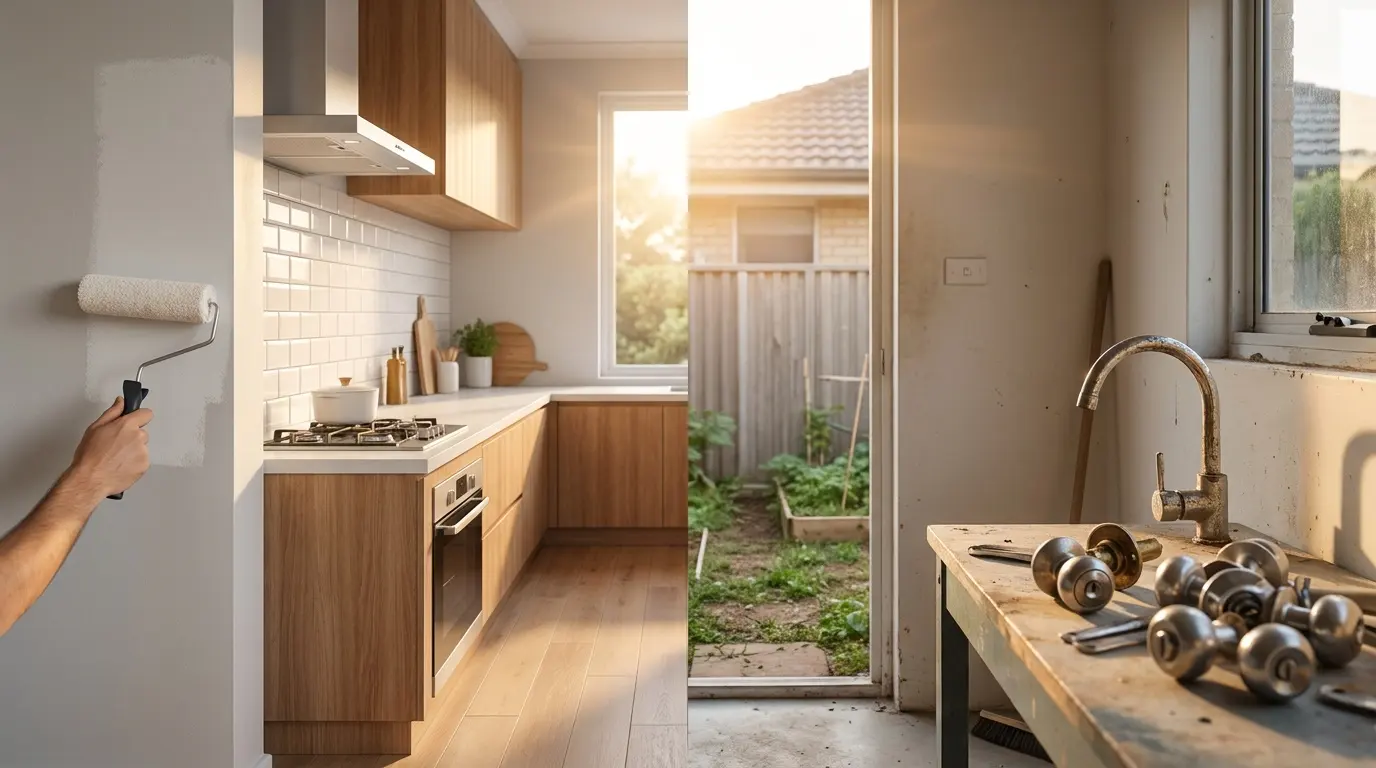

Selling a house in poor condition demands a strategic approach and careful consideration, starting from the initial steps of evaluating the property's true state to the final stages of closing the deal. Presenting a distressed property to potential buyers and navigating the complexities of negotiations are often essential skills for these types of homes. So, what’s the best approach to ensure a successful home sale (opens in a new tab) despite the odds stacked against a less-than-ideal property?
For informational purposes only. Always consult with a licensed real estate professional before proceeding with any real estate transaction.
Sell Your Home With The Young Team.
Maximize the value of your home with The Young Team. Schedule your consultation today and experience a hassle-free home selling process with the best real estate team in Ohio.
Get Started (opens in a new tab)
5 Tips for Selling a House in Poor Condition
- Consider selling as-is (opens in a new tab) to save time and money on expensive repairs.
- Opt for minor repairs to enhance property appeal where it makes sense.
- If possible, undertake major repairs with a high return on investment.
- Market to the right buyer—DIYers, investors, etc.
- Price the home competitively based on its condition and market trends.
What is "Poor Condition"?
When it comes to assessing a house, the term "poor condition" generally refers to significant structural or functional issues that affect the habitability, safety, or overall appeal of the property.
For example, homes in poor condition may exhibit serious quality-of-life problems such as extensive roof damage, significant foundation issues, black mold, serious electrical problems, major plumbing issues with pipes, termite infestations, and non-functional HVAC.
However, “poor condition” is not only a relative term, it’s a subjective one. In some areas, a home that’s run down, but habitable, may be considered “fair condition.” One buyer might consider dirty carpet and peeling paint to be in “poor condition,” while another eager for a fixer-upper project wouldn’t bat an eye.
Visual indicators of a property in less-than-perfect condition could include outdated kitchens (opens in a new tab) and bathrooms, cluttered interiors, neglected landscaping, dingy paint, stained flooring, and weathered exteriors.
A Quick Word on Home Inspections
You can’t “fail” a home inspection, and there isn’t a threshold at which the inspector will indicate that your home is in “poor condition” and chase buyers away. The home inspection (opens in a new tab) is only there to disclose the condition of the house. Depending on the amount of work that needs to be done, you may need to target a different type of buyer, but your home still has value no matter its condition and you can sell it no matter the inspection results.
Find a Good Real Estate Agent
Partnering with a skilled real estate agent (opens in a new tab), particularly one who has worked with distressed properties before, is often essential when selling a house in poor condition.
A qualified real estate agent can provide valuable insights into market trends and buyer preferences, helping navigate the selling process. And don’t worry—yours isn’t the first home in poor condition they’ve seen, and it won’t be the last.
Your listing agent (opens in a new tab) will assist in setting a competitive price that reflects the property's actual condition and potential for improvement. An experienced agent should also be able to recommend cost-effective ways to enhance the property's appeal and maximize its value despite its poor condition.
A good agent’s expertise in seller’s disclosures (opens in a new tab) and negotiations related to the property's condition can be crucial to achieving a smooth transaction that benefits both the seller and the buyer. In the competitive real estate market, having the right agent by your side can make a significant difference.
Options For Selling a Home in Poor Condition
When selling a home in poor condition, homeowners will have several options to consider. These include selling the property as-is to avoid repair costs, making minor repairs to enhance the property's appeal, or undertaking major renovations to increase the home's value. Each option comes with its own set of considerations regarding cost, time, and potential return on investment.
Sell As-Is
Selling a home as-is can be a practical option for homeowners looking to offload properties in poor condition without the burden of making costly repairs or renovations.
By listing a property in its current condition, sellers can attract fixer-upper enthusiasts and investors seeking renovation opportunities. Opting to sell as-is can save time and money on repairs, as buyers understand they are purchasing a home in poor condition. This approach also allows sellers to avoid the hassle of negotiating repairs.
With that said, buyers will likely negotiate a lower price based on the home's current state, acknowledging the need for future investments. Selling a house as-is typically results in a quicker pre-listing process compared to making extensive repairs, but outside of a hot market, it can cause a home to sell slower due to the narrower buyer pool.
If selling as-is seems like your best option, consider taking things a step further and selling your house for cash (opens in a new tab) directly to an investor. This option can be a viable solution for those aiming to move on from a property swiftly and efficiently.
Make Minor Repairs
To enhance the appeal of a house in poor condition and attract a wider pool of potential buyers, it may be prudent to make minor repairs—for instance, fixing small issues like leaky faucets, peeling paint, or broken light fixtures that improve the property’s presentation at a minimal cost.
Simple tasks such as replacing outdated hardware, fixing squeaky doors, or cleaning carpets can significantly enhance the overall impression of the home. Even if your home needs a major repair, like replacing the roof, keeping the rest of the buyer’s mental to-do list clear can make that one repair feel less overwhelming.
By investing in minor repairs, sellers can improve the property's impression on buyers without the need for a significant financial investment. This strategy not only makes the home more appealing but also increases the chances of selling a house in poor condition in a competitive real estate market.
Make Major Repairs
To further improve the market appeal and potential sale price of a home in poor condition, it’s worth considering major repairs. Investing in major repairs like a roof replacement, electrical updates, or plumbing fixes can significantly increase a property’s market value. While you might not directly get back 100% of the cost, selling your home faster (opens in a new tab) might make the effort worthwhile.
Addressing severe issues will make it easier to attract a wider range of buyers and increase the likelihood of a sale, though you may need to prioritize fixes with a trusted real estate agent. It’s important to evaluate each repair’s likely return on investment before finalizing your plans.
Ask your agent (opens in a new tab) whether you’d be better off making big-ticket repairs or making adjustments to the price. You can never be sure what your eventual buyer will and won’t be willing to take on, and you can always negotiate a repair credit later without risking an ROI backfire.
A few factors to help you decide whether it’s worth pursuing major repairs:
- How fast are homes in your market selling (opens in a new tab)? In a hot enough market, a home’s condition might not matter.
- Are similar properties not selling (opens in a new tab), while homes in better condition are?
- Is your home the only one around that needs repairs? Buyer expectations could lead to even lower offers than normal.
- How much can you afford to spend upfront on a particular repair?
- How much can you expect to get back from a particular repair?
- Would making a particular repair significantly change your marketing opportunities?
Marketing a Home in Poor Condition
When it comes to marketing any home, it’s important to highlight its unique selling points, and that’s especially true of a property that’s in poor condition. To effectively showcase your home, consider these strategies:
- Utilize professional real estate photos and virtual tours to showcase the property's potential despite its current state.
- Stage key areas of the home (opens in a new tab) to help buyers envision the possibilities and attractiveness of the property.
- Be transparent about the home's condition in the listing description to manage buyer expectations and build trust.
- Price the property competitively (opens in a new tab) based on its condition and local comps to attract serious potential buyers looking for opportunities.
For informational purposes only. Always consult with a licensed real estate professional before proceeding with any real estate transaction.
Reach Buyers Who Want a Home in Poor Condition
Selling a house in poor condition can be challenging, but with the right strategy and transparency, it’s possible to attract interested buyers and secure a successful sale. By working with a skilled real estate agent, considering different selling options, and effectively marketing the property, homeowners can maximize their chances of selling their home despite its condition. With careful planning and execution, even a house in truly poor condition can reach the right buyer.
Sell Your Home With Confidence.
Sell Your Home With The Young Team.
Ready to sell your home for top dollar? Let The Young Team handle it all. Contact us now to schedule a consultation and take the first step towards a stress-free home selling experience with the best real estate team in OH.