
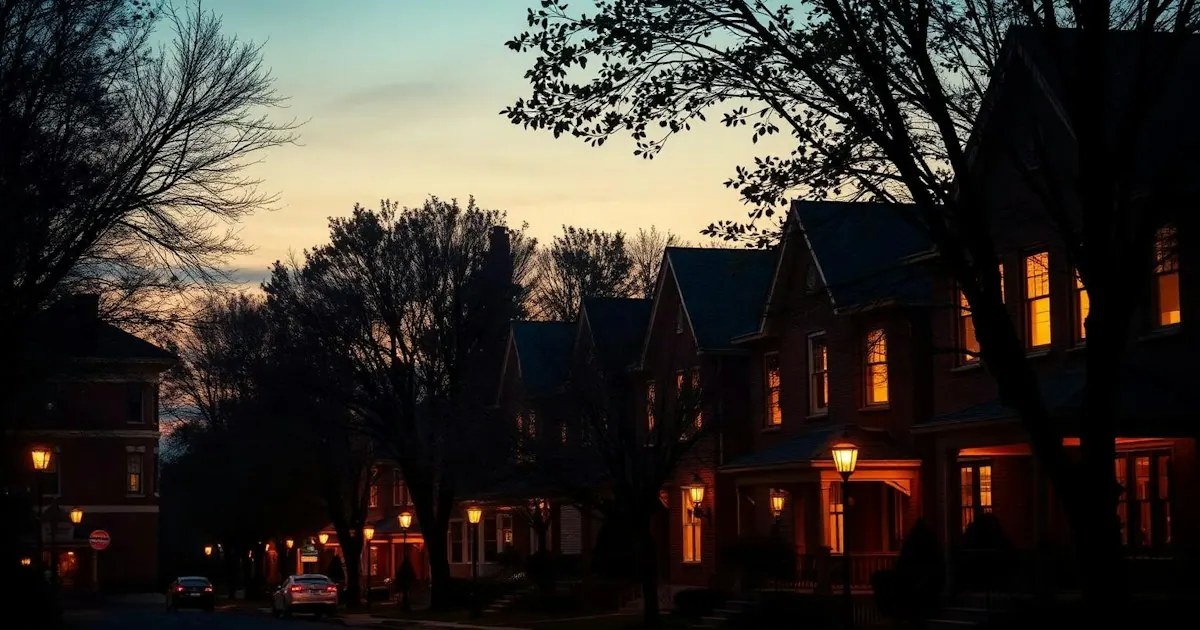
Euclid Avenue in Cleveland (opens in a new tab) was once home to the most spectacular collection of mansions in America. Hard to believe now, but this street was called "the Showplace of America" and compared to the Champs-Élysées in Paris.
From the 1860s to the 1930s, Euclid Avenue's Millionaires' Row featured more than 40 incredible mansions owned by some of the richest people in the country. Today, only four of these grand homes remain.
The story of Millionaires' Row is about more than just fancy houses. It's about Cleveland's golden age, the rise and fall of wealth, and how quickly things can change in a city.
Search Cleveland Homes For Sale.
See Homes in Cleveland (opens in a new tab)
Fun Facts About Millionaires’ Row in Cleveland
- Euclid Avenue was once called "the most beautiful street in America" by travel guides.
- Some mansions required up to 100 servants to maintain.
- By 1937, not a single mansion was still used as a private home.
Want to visit? The remaining mansions on Millionaires’ Row (not counting the Morris Bradley Carriage House or mansions with heavily modified exterior structures) are:
- Mather Mansion - 2605 Euclid Avenue
- Stager-Beckwith Mansion - 3813 Euclid Avenue
- Drury Mansion - 8615 Euclid Avenue
- H.W. White Mansion - 8937 Euclid Avenue
When Euclid Avenue Was America's Grandest Street (1860s–1910s)
In the mid-1800s, Cleveland was booming. The city's factories, railroads, and shipping made it one of America's industrial powerhouses. By 1910, Cleveland ranked as the sixth-largest city in the country.
The story of Millionaires' Row began with Rufus Dunham, who bought 140 acres along Euclid Avenue for a farm and tavern serving stagecoach travelers. Early on, the road often flooded. As wealthy families began moving in, the city finally built a proper drainage system.
This street featured wide, elm-lined sidewalks paved with Medina sandstone. Enormous mansions sat several acres back from the road, with beautifully landscaped gardens and ornate gates signaling the residents' importance.
The mansions weren't built shoulder-to-shoulder like in other cities. Each stood on a large plot of land, featuring different architectural styles—Gothic, Victorian, Tudor, and Romanesque—but all showcasing wealth.
Imagine driving down Euclid Avenue in 1890. Your carriage rolls past mansion after mansion, each more impressive than the last. Through the trees, you glimpse sprawling estates with manicured gardens. The street buzzes with the horse-drawn carriages of the wealthy. It feels more like visiting European royalty than a Midwestern American city.
The People Who Built Their Dreams on Euclid Avenue
The families who lived on Millionaires' Row weren't just rich—they shaped American industry. Their names still echo through Cleveland today.
John D. Rockefeller started Standard Oil and became the richest person in modern history. His Euclid Avenue home cost $40,000 in 1868 (about $1.5 million today).
Charles F. Brush might not be a household name now, but his inventions changed how we live. This brilliant inventor built the world's largest windmill in his backyard to power his home—the first house in Cleveland with electricity. (Which, fun fact (opens in a new tab), was in the first city with electric traffic signals.) The 60-foot windmill generated 12 kilowatts and operated for 20 years.
Samuel Mather made his fortune in iron ore and shipping. His 45-room Tudor mansion, built in 1910, was the most expensive home ever built on the street. Made of handcrafted stone, it featured a third-floor ballroom with 16-foot ceilings that could host 300 guests.
Behind some of these mansions were equally notable women.
Julia Stone, wife of railroad magnate Amasa Stone, helped establish Western Reserve University.
Flora Stone Mather (Samuel's wife) funded numerous charitable causes and has buildings named after her at Case Western Reserve.
Inside the Mansions: How Cleveland's Wealthy Lived
Step through the front doors of these mansions and enter another world. The interiors matched the grand exteriors with stunning craftsmanship.
The Western Reserve Historical Society (opens in a new tab)’s black-and-white photos of the G.E. Herrick house parlor offer a rare glimpse inside these homes. Ornate wood carvings, custom furniture, imported art, massive fireplaces, and intricate wallpaper showcased the owner's wealth.
Many mansions featured Tiffany glass windows, mahogany paneling, and marble imported from Italy. Fifteen of the grandest homes were designed by Charles Frederick Schweinfurth, who also created Cleveland's Old Stone Church and Trinity Cathedral.
While today's wealthy might employ a housekeeper or two, these mansions required armies of staff. Samuel Andrews' sprawling Victorian Gothic home needed 100 servants to maintain it.
These weren't just homes—they were centers of power. In Daniel Eells' mansion library, political kingmaker Mark Hanna convinced William McKinley to run for president. Four U.S. presidents visited Sylvester Everett in his 50-plus-room Gothic castle at East 40th Street.
While typical workers crowded into small apartments with shared bathrooms in Cleveland, these mansions featured indoor plumbing, central heating, multiple bathrooms, and even early versions of refrigeration.
Why Did Millionaires' Row Disappear? (1920s–1950s)
By the 1920s, wealthy families started moving out, and by 1937, not a single mansion was still occupied as a private home.
Ironically, the industrial success that created these fortunes also destroyed their neighborhood. As factories expanded, pollution became unbearable. The wealthy began fleeing to cleaner suburbs in "the Heights"—Cleveland Heights (opens in a new tab) and Shaker Heights (opens in a new tab).
Taxes skyrocketed as downtown Cleveland expanded eastward. Commercial buildings started replacing the older mansions near Public Square. Department stores, offices, and theaters (including what's now Playhouse Square) changed the character of western Euclid Avenue.
Look at how quickly things changed. In 1910, the Samuel Mather mansion was built as the street's crown jewel. Just 13 years later, the Andrews mansion was demolished. By the 1930s, car dealerships and motels stood where millionaires once lived.
The final blow came in the 1950s when many remaining homes were demolished for the Innerbelt Freeway construction.
Clevelanders didn’t fight particularly hard to save these homes—in the 1940s and 1950s, these Victorian and Gothic mansions were considered outdated and unattractive. When the Everett mansion was demolished in 1938, The Plain Dealer wrote, "This Gothic structure was considered fashionable at one time."
The Last Survivors: Four Mansions You Can Still Visit Today
Out of more than 40 original mansions, only four main buildings survive today in their full forms. Each tells part of the story of Millionaires' Row.
Mather Mansion (2605 Euclid Avenue)
Samuel Mather's 45-room Tudor masterpiece still stands on Cleveland State University's (CSU) campus. Built in 1910 for a staggering sum, it was the last great mansion constructed on Millionaires' Row.
Today, it houses CSU's Center for International Services and Programs. The exterior is largely unchanged.
Stager-Beckwith Mansion (3813 Euclid Avenue)
The oldest survivor, built in the 1860s, now houses the Cleveland Children's Museum. Anson Stager, who created the secret telegraph code used during the Civil War, built this Second Empire-style mansion but only lived in it for two years. Thomas Sterling Beckwith (of Beckwith, Sterling & Company furniture) moved in next.
It's the most accessible mansion for visitors, though significantly renovated inside. (And outside—two rear wings were added in 1911.) Enjoy the history while your kids enjoy one of the best kids’ attractions in Cleveland (opens in a new tab).
Drury Mansion (8615 Euclid Avenue)
Francis Drury invented the first internal gear lawnmower and made his fortune leading the T&B Foundry Company. His 34-room, 25,000-square-foot mansion now sits on the Cleveland Clinic campus as the "Foundation House."
The Clinic partly restored the first floor to its 1920s condition. It now hosts conferences and receptions but isn't regularly open to the public.
H.W. White Mansion (8937 Euclid Avenue)
Henry Windsor White's Romanesque stone mansion was designed by renowned architect Frank Meade. White worked for the Baker Motor Vehicle Company (not the famous White Motor Company as often mistakenly claimed).
The Cleveland Clinic now uses this building for alumni relations and development.
What Happened to the Other Houses?
There are lists floating around the internet that mention more houses than the remaining four. Here’s what happened to them:
Partial Mansions on Millionaires’ Row
Morris Bradley Carriage House (7217 Euclid Avenue) - still standing! It’s not on the list above because the manor it served was demolished in 1998 after neglect. The bygone manor was built in 1885 for Morris Bradley, a major real estate owner and boat builder, and his wife, Anna A. Leininger Bradley. The site where it stood is now One Midtown Townhomes.
This 1887 carriage house is still a great example of Tudor architecture. It’s been several things over the years, from its original purpose as an animal and carriage shelter to a car shop to its current status as an artisan workshop.
George Howe Mansion (2248 Euclid Avenue) - it’s a toss-up whether this one should be listed as partial or whole. This mansion was built for Howe and his wife Catherine in 1892, finishing construction in 1894. It’s since been an art gallery, rentable art studios, the Women’s Art Club of Cleveland, the Cleveland Society for Artists, and more. The rear servants’ wing, carriage house, and parapet wall were demolished, and the stable was converted into an auto body shop.
The mansion came into CSU’s hands in 1982 and was restored with a modern rear addition. It’s now called Parker-Hannifin Hall (opens in a new tab) and serves as a conference center and offices. Much of the exterior remains, but it’s equally true that much has changed.
John Henry Devereux Mansion (3226 Euclid Avenue) - technically still standing. This mansion was built in 1873 as the home of Devereux, his wife Antoinette, their four children, and their six live-in servants.
In 1921, it had front and rear additions and had the front façade replaced in a different style, creating what’s now the Fine Arts Building. It looks very, very different now, but some of its original features remain.
(Relatively) Recently Demolished Mansions
Hall-Sullivan House (7218 Euclid Avenue) - demolished in 2021. It had been more or less abandoned for decades, and an attempt to relocate the house to save it from development failed for lack of a buyer.
The address is now MidTown Foundry Lofts, and the bygone mansion is honored in salvaged architectural artifacts incorporated into a common room in the apartment complex.
Luther Allen Mansion (7609 Euclid Avenue) - demolished in 2015. It had been altered by an addition in 1958, neglected, and put through an unfinished renovation. The address is now Greenbridge Commons, a supportive housing project.
Lyman Treadway House (8917 Euclid Avenue) - demolished in 2002. It had been part of the Cleveland Museum of Health, but was replaced by a new Cleveland Clinic building.
Hunt for Hidden Traces of Millionaires' Row in Modern Cleveland
Beyond the surviving mansions, you can find other traces of this lost era if you know where to look.
Visit the Stockbridge Apartments building (built in 1911 as a hotel for wealthy residents who didn't want to heat their huge mansions in winter). Inside, you'll find beautiful hand-painted murals showing the lost mansions, including the Beckwith and Corning estates.
Look for historical markers along Euclid Avenue. Though many buildings are gone, the street layout still shows evidence of the grand era. Notice the unusually wide setbacks of newer buildings—these follow the pattern established by the mansions.
The Western Reserve Historical Society houses photographs and memorabilia from the mansions, including furniture and decorative items saved before demolition.
Today, Cleveland Clinic's main campus, Cleveland State University buildings, and various businesses now occupy most of the land.
Look for these hidden traces of Millionaires' Row:
- Older stone walls that might have been part of estate boundaries
- Large lots between modern buildings
- Ornate lamp posts preserved from the original street
- Fragments of iron fencing that once surrounded mansions
- Mature trees that once graced the gardens of these estates
Beyond Millionaires' Row: What to Do in Modern Euclid Avenue
After exploring the historical sites, enjoy what Euclid Avenue offers today:
Playhouse Square
Playhouse Square is the second-largest performing arts center in the U.S. after New York's Lincoln Center. Check out Broadway shows, concerts, and the world's largest outdoor chandelier.
University Circle
Just east of the old Millionaires' Row, this cultural hub houses the Cleveland Museum of Art, Cleveland Botanical Garden, and Severance Hall (home of the Cleveland Orchestra). Many of Cleveland’s best attractions (opens in a new tab) are here.
Cleveland State University
Explore the campus that preserves the Mather Mansion and houses other architectural masterpieces.
Local Eats
Try Mama Catenas for old-world Italian food in an elegant setting, located near where Millionaires' Row once stood.
Millionaires' Row: Gone But Not Forgotten
The story of Millionaires' Row isn't just about fancy houses and famous residents (opens in a new tab)—it's about Cleveland's identity and legacy. The grand mansions of Millionaires' Row have largely disappeared, but their legacy lives on in Cleveland's cultural institutions, architecture, and identity.
These families shaped Cleveland beyond their lifetimes. Their philanthropic giving established institutions that still thrive today—the Cleveland Museum of Art, Case Western Reserve University, University Hospitals, and countless other organizations.
The millionaires may be gone, but their impact on Cleveland remains. Although the elm trees and wrought iron gates have disappeared, Euclid Avenue still serves as Cleveland's central corridor—connecting downtown to University Circle, just as it did over 100 years ago.
Ready to start looking for your new home in Cleveland? Call The Young Team (opens in a new tab) at (216) 402-4774 today to get in touch with a local real estate expert who can help you start your homebuying journey.