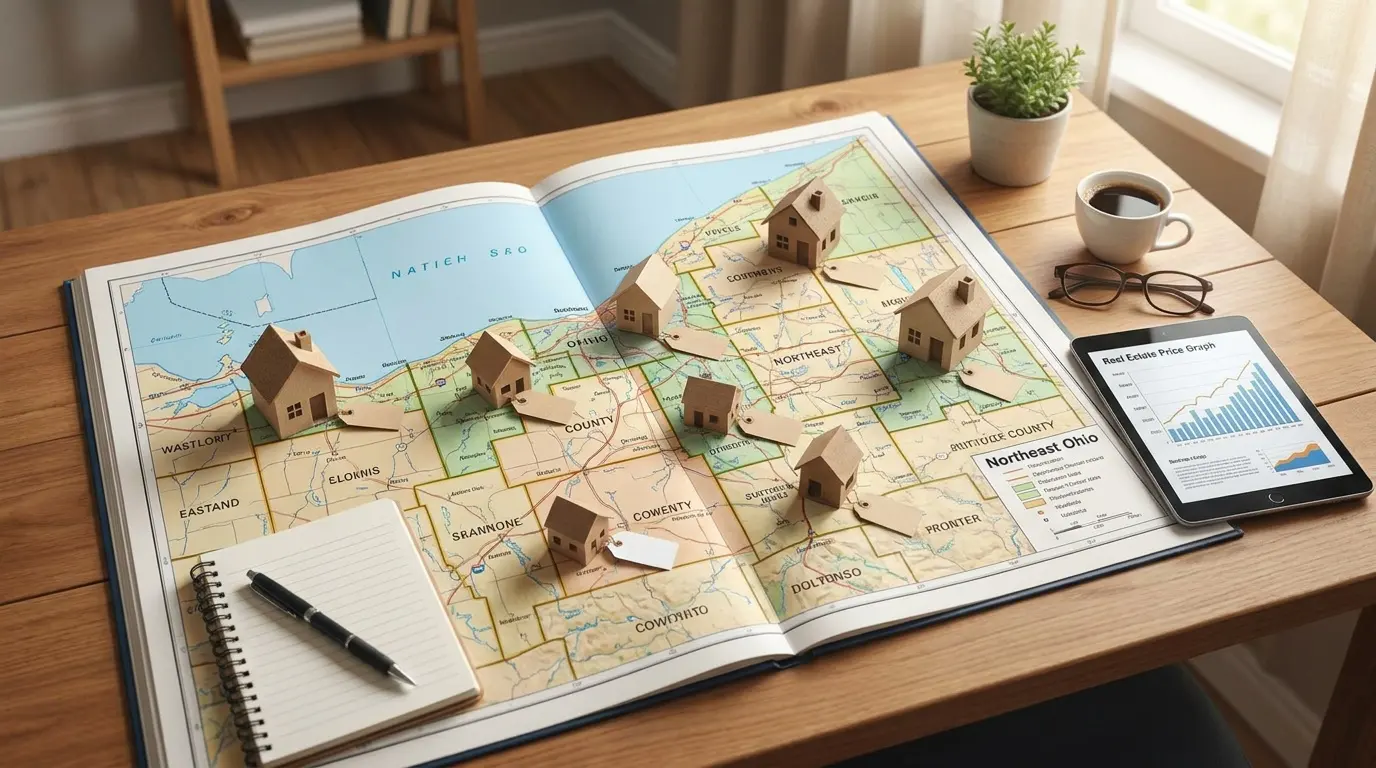
Buying your first home feels overwhelming. Mortgage applications, home inspections (opens in a new tab), negotiations—so many steps and so much new stuff to learn along the way. But here's the reassuring news: lots of people figure this out every day, and you can too.
This guide cuts through the confusion without all of the fancy real estate talk. Just clear steps to help you lower your stress levels during the ups and downs of buying your first home.
Find Your New Home With The Young Team.
Working with an agent takes the stress out of buying a home. Schedule your consultation today and experience a hassle-free home-buying process with the best real estate team in Ohio.
Get Started (opens in a new tab)
11 Key Tips First-Time Homebuyers Should Know
- You'll need to save more money than just the down payment
- Check your credit score before talking to lenders
- Talk to lenders before looking at houses
- Shop around for the best possible loan terms
- Look for a local real estate agent who frequently works with first-timers
- Make lists for what you need vs. what you want in a house
- The neighborhood is at least as important as the house
- Ask your agent for the best offer strategies in the current market
- Don't skip the home inspection, especially if you're buying the home online (opens in a new tab)
- Ask for explanations of any closing costs you're not sure about
- Be prepared to spend months on the search—buyer fatigue is real, but your future self with thank you for not rushing
Save More Than You Think You Need
Understandably, most first-time buyers focus on the down payment (opens in a new tab). But that's just part of what you'll pay upfront.
Your total cash needs will most likely include:
- Down payment (3–20% of home price)
- Closing costs (2–6% of loan amount)
- Moving expenses ($1,000–$3,000 or more depending on distance)
- Immediate repairs or updates
- Emergency fund for your first year
Start saving early—ideally one to two years before you want to buy. And if you can swing it, set up automatic transfers from your checking to your savings account on payday. This makes saving happen without thinking about it, which can be one of the biggest hurdles to overcome.
Want to speed things up? Look for down payment assistance programs in your area. Many first-time buyers qualify for help (opens in a new tab). Some programs offer grants (essentially free money!) or loans you don't have to repay if you stay in the house long enough.
Fix Your Credit Before You Go Mortgage Shopping
Your credit score (opens in a new tab) might be the single most significant factor in what your mortgage ends up costing you every month. A 100-point difference in your score could mean paying $100,000 MORE over 30 years for the exact same house!
Here's how to get your credit ready:
- Get your free credit reports from all three bureaus at annualcreditreport.com (opens in a new tab)
- Look for mistakes and get them fixed (more than one-third of reports have errors!)
- Pay down credit card balances to below 30% of your limits
- Keep making all payments on time
- Don't close old credit cards—they help your score
Another big one: Don't apply for ANY new credit for at least six months before getting a mortgage. Each application dings your score a bit, and lenders get nervous when they see lots of recent credit checks.
Get Pre-Approved Before House Hunting
House hunting without a pre-approval can be a big mistake! You might waste time looking at homes you can't realistically afford, or worse—you could fall in love with a house and lose it while scrambling to get financing.
Pre-approval means a lender has checked your finances and credit and is willing to lend you a specific amount. It shows sellers you're serious and can actually close the deal.
To get pre-approved, you'll usually need:
- Recent pay stubs
- Last two years of tax returns
- Bank statements
- Investment account statements
- Photo ID
Getting pre-approved can take one to three days, and the letter should be good for 60–90 days (but check with your lender to be sure). This step will help you figure out what price range to shop in.
Pick the Right Mortgage
Did you know there are different types of mortgages? As a first-time buyer, you might consider:
Conventional loans: Need good credit (usually 620+) and typically require at least 3% down. It’s possible to avoid extra fees if you can put 20% down.
FHA loans: More flexible on credit (as low as 580) and need just 3.5% down. But they ALWAYS include mortgage insurance, which adds to your monthly payment.
VA loans: For veterans and service members. No down payment (opens in a new tab) needed and no mortgage insurance. Usually the best deal—if you qualify.
USDA loans: For homes in rural areas. No down payment required, but there are income limits.
Don't just take the first loan you're offered! Get quotes from at least three different lenders. Remember, even a minor difference in your interest rate (opens in a new tab) can save you thousands over the life of your loan.
Find an Agent Who Actually Listens to YOU
Finding a good real estate agent (opens in a new tab) makes a huge difference, especially for first-time buyers. They explain the process, help you avoid mistakes, and fight for your interests every step of the way.
Look for an agent who:
- Works with lots of first-time buyers
- Knows the neighborhoods you're interested in
- Responds quickly to calls and texts
- Listens more than they talk
- Explains things clearly without making you feel dumb
- Has good reviews from past clients
If you have any friends who recently bought homes, don’t hesitate to ask for recommendations. Once you’re feeling good about the contenders, aim to interview at least two to three agents before choosing one.
Know What You Need vs. What You Want
Before you dive into house hunting, it’s worth making two very distinct lists.
Must-haves. Things you absolutely cannot live without, such as:
- Number of bedrooms/bathrooms
- Maximum commute time
- Specific school district
- Accessibility features
Nice-to-haves. Things you want but could compromise on:
- Updated kitchen
- Backyard
- Garage
- Finished basement
Your must-have list should be short—ideally just three to five items. The longer this list becomes, the harder your home search will be, so try not to get too hung up on minor details. Consider that you may be moving into a starter home rather than a forever home (opens in a new tab), where you can be more picky.
Remember that paint colors, fixtures, and even some layouts can be changed. Focus on things that can't be changed, like location and the basic structure.
Research Neighborhoods Before Falling in Love With a House
A perfect house in the wrong neighborhood quickly becomes the wrong house. Before focusing on specific homes that look fantastic online, research potential areas:
- Visit neighborhoods at different times (morning, evening, weekend)
- Check crime stats online
- Look up school ratings (even if you don't have kids—it affects resale)
- Test your potential commute during actual rush hour
- Walk around to see how neighbors maintain their homes
- Check for nearby amenities (grocery stores, parks, restaurants, hospitals)
- Look up property tax rates
While some of these steps can feel like homework, don't rush ahead. Where your home is located affects everything from your daily happiness to how well it holds value.
Make Smart Offers in Today's Market
When you find the right home, especially if it's a good time to buy (opens in a new tab), you’ll need to move quickly but wisely.
Before making an offer:
- Have your agent show you similar recently sold homes ("comps")
- Check how long the house has been on the market
- Ask if there are other offers
- Find out why the owners are selling
- Review the seller's disclosure for any potential problems
- Consider getting a pre-inspection if you're in a competitive market
If you’re looking in a hot market, your first offer should be your best offer. In slower markets, you might start lower and negotiate up. This is something your real estate agent can help you strategize.
No matter how amazing a home seems, don't waive important contingencies just to win a bidding war. Home inspection and financing contingencies protect you from making a big mistake (opens in a new tab).
Don't Skip the Home Inspection!
Even if the house looks perfect online and in person, you should still get a professional inspection. This can cost anywhere from $300 to $600 but could easily save you thousands (not to mention a ton of stress).
A good inspector checks:
- Roof and foundation
- Electrical and plumbing systems
- HVAC (heating and cooling)
- Appliances
- Signs of water damage or pests
Go to the inspection, if possible. This gives you a chance to ask questions and really understand any issues. Even just stopping by for a quick rundown as the inspector wraps up can be illuminating.
After the inspection is written up, you can:
- Accept the home as-is
- Ask the seller to make repairs
- Ask for money off the price instead of repairs
- Walk away if there are serious problems
Never feel bad about walking away from a house with big issues. There will be other houses!
Understand Closing Costs Before Signing
The final step is closing, when you sign all the paperwork and officially buy the house. Be prepared for closing costs (opens in a new tab), which include:
- Loan origination fees
- Title search and insurance
- Appraisal fee
- Credit report fee
- Recording fees
- Prepaid property taxes and homeowners insurance
These costs usually total 2–6% of your loan amount. On a $300,000 house, that's $6,000–$18,000 on top of your down payment!
Some sellers might help cover these costs if you negotiate it in your offer. You can also sometimes roll closing costs into your loan amount, but you'll pay interest on them.
Stay Patient Throughout the Whole Process
Buying a home takes time (opens in a new tab)—usually two to six months from starting your search to getting keys. In competitive markets, it might take even longer to find the right house.
Don't rush major decisions just because you're tired of looking. And don't stretch your budget to the breaking point for a slightly bigger or fancier house.
The right home at the right price is worth waiting for, and it’ll come with time. Remember that your first home probably won't be your forever home—it's just the first step.
Ready to Buy a Home?
Buying your first home probably feels complicated, but taking it step by step and having a homebuying checklist (opens in a new tab) can make it so much more manageable. To recap:
- Prepare your finances (opens in a new tab) (savings and credit score)
- Get pre-approved for a mortgage
- Find the right agent
- Research neighborhoods
- Make a competitive offer
- Get a thorough home inspection
- Close the deal
Take your time with each step. Always ask questions when you don't understand something. And don't let anyone pressure you into making decisions you're not comfortable with.
While there’s some real work involved, your first home purchase should be exciting, not terrifying. With preparation and the right help, you'll soon have the keys to a home that fits your life and budget.
Ready to start looking for your new home in Ohio? Call The Young Team (opens in a new tab) at (216) 402-4774 today to get in touch with a local real estate expert who can help you start your homebuying journey.
Buy a Home With Confidence.
Partner With The Young Team.
From your first home to your forever home, let the Young Team handle it all. Contact us now to schedule a consultation and take the first step towards buying your dream house in Ohio.